
Making it real

My letter published in the Sunday National caused a bit of a stir. Which was the whole idea, of course. I am semi-persuaded that the comments were not as knee-jerkingly opposed as has been the case in the past. A few years ago, when I gave a presentation on #ScottishUDI at the Scottish Sovereignty Research Group (SSRG) conference in Dunfermline, somebody remarked afterwards that I was perhaps too far ahead of the leading edge of the independence movement for my thinking on the constitutional issue to get any purchase on people’s imagination. That may well have been a wise comment.
The orthodoxies of the independence industry are very deeply embedded in the independence movement. It is understandably difficult for people to set aside what they’ve been told by ‘leading figures’ for well over a decade. It’s inevitably difficult to persuade people to shake off the idea that the Section 30 process is the ‘gold standard’ of democracy. It is difficult for people who have been told repeatedly by those they’ve come to regard as ‘experts’ on the constitutional issue that the Section 30 process is the only way forward because it was the only way that was ‘legal and constitutional’.
It’s inevitably difficult to persuade people to shake off the idea that the Section 30 process is the ‘gold standard’ of democracy.
Dissenting voices were shunned or abused and shouted down every time they tried to be heard. My impression is that there is a lot less of that attitude now. People who refused to even listen now hesitantly give the new thinking at least a bit of consideration. The longer John Swinney dithers and bloviates, the easier it is to persuade people that we need a very different approach to the whole constitutional issue.
Andy Burnham has now humiliated Swinney, as predicted by anybody with the smallest understanding of the situation. There is no ‘Big Secret Plan’, as will become clear in the coming days and weeks. As the realisation dawns, I anticipate more and more people will start to take an interest in ideas they previously dismissed as casually as Andy Burnham dismissed First Minister of Scotland John Swinney, First Minister of Wales Rhun ap Iorwerth, and First Minister of Northern Ireland Michelle O’Neill.
If I am correct in foreseeing increasing interest in alternative takes on the constitutional issue, then this puts a burden of responsibility on those expounding these new perspectives. We must work even harder at explaining our ideas. I’ve got to write more articles on various aspects of the #ScottishUDI strategy.
One of the most common reactions to my sketch of the #ScottishUDI process in that letter was that support for independence was not high enough. That is a fair point. But I would maintain that initiation of the #ScottishUDI process is the thing that will take support for independence towards a consistent 60%. Saying we can’t do anything until we have more support is a self-realising dictum. This has been thoroughly proved by twelve years of inaction by the SNP Scottish Government. They have done nothing. The figures haven’t moved. It is not unreasonable to suppose that if you do something, the figures will move.
I would maintain that initiation of the #ScottishUDI process is the thing that will take support for independence towards a consistent 60%.
Requesting a Section order doesn’t count as action. It has been done repeatedly. Often enough that you would have to be extremely dull-witted to imagine it would ever produce a positive result. Even if you are unaware of the damage done by the request, you must know it’s a dead end.
There is no ‘Big Secret Plan’. That was all part of the confidence trick played on voters by John Swinney. That and the downright lie that he could guarantee a referendum. Swinney will probably roll out something old and shop-worn and present it as his ‘Plan B’. Most likely, he’ll start talking about making the next UK general election a de facto referendum. This was briefly SNP strategy during Humza Yousaf’s brief spell as First Minister, if memory serves. Swinney could easily drag it off the top of the wardrobe and dust it off. Decorate it with a few glittering generalities, and there you have it, a nice shiny plan-like thing. Plan-like enough to convince the endlessly gullible.
The advantage of this is that it is good for electioneering. Nothing is more important than winning seats. Or to put it another way, everything else can be sacrificed in the name of winning electoral prizes.
Of course, when the SNP played with this idea back then, they weren’t talking about a de facto referendum on independence. Or to be more accurate, they were talking as if they were talking about a de facto referendum on independence. In fact, the plan was to make it a de facto referendum on asking for a Section 30 order. Which is just as pointless as it sounds. Electing an SNP government provides a mandate for action to progress Scotland’s cause. A de facto referendum adds nothing to that. Although it would surely subtract from it if that de facto referendum were lost.
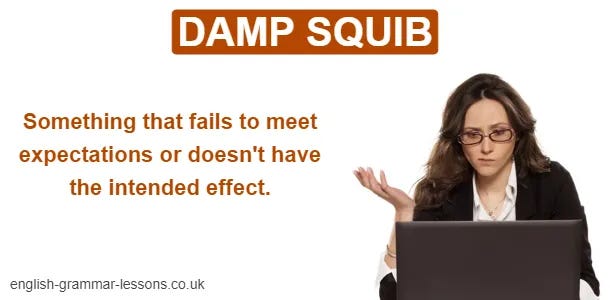
Watch as the ‘Big Secret Plan’ becomes the dampest of squibs.
Getting back to the matter of increasing support for independence, what will achieve this is making independence real. At present, independence isn’t real. It’s just something some people talk about. There is nothing tangible about it. Back in the early days of the Yes movement, support grew at a phenomenal rate. It grew because there was a purpose relating to a real event on a given date. This made independence real. We don’t have that now. Back then, we thought we had a process by which we could restore Scotland’s independence. We didn’t. But that is irrelevant in this context. Because I’m talking about the psychological effect of making something real in people’s minds.
At present, independence isn’t real. It’s just something some people talk about. There is nothing tangible about it.
I have previously used the analogy of the independence industry selling independence like a holiday destination. Which is what they’ve been doing for about thirteen years now. It stopped having any effect sometime in summer 2014. It definitely hasn’t had any effect since 2015, when Sturgeon put the independence bus on blocks. The independence industry blames this failure to increase support for independence on activists. We’re not selling hard enough. We need glossier brochures. We need more marches and rallies. We have to work harder.
The real reason support for independence hasn’t increased is that it isn’t real in the minds of voters. It isn’t real because although the brochure is very alluring, there is nothing about travel plans. The independence industry is selling independence like a holiday destination, but it has nothing whatever to say about how we get there.
This is why I calculate that the #ScottishUDI process will start the numbers rising. When there is a tangible plan that people can see and understand, the objective becomes real in their minds. That really is all it takes. Because it is real in their minds, they are more receptive to arguments in favour of independence. Presenting a credible plan is the kick Scotland’s cause needs. Let’s have no more damp squibs.
Here is a different perspective, that "the real reason support for independence hasn’t increased is" nothing to do with the stated route to independence, rather it is because:
1. a large part of the Scottish population still suffer from a 'colonial mindset' which as we know is an important pathology associated with the 'colonial condition', and where to a large extent it disna maitter whit we tell them, "in the (colonised) minds of voters" their decision is already made for them, and;
2. the constant and rising in-migration of people to Scotland from other countries who do not identify as Scottish and who tend to have a high propensity to vote against independence.
https://yoursforscotlandcom.wordpress.com/2021/07/11/determinants-of-independence-demographics/
I reckon you are spot on Peter.
The real and lasting benefit of the Scottish Independence Referendum campaign is that it succeeded in increasing YES support from around 33% on (opinion polling) average in 2012 to just under 45% in the actual vote on 18th September 2014.
The momentum continued thereafter during the last quarter of 2014 when YES sentiment registered just over 50% in surveys published during that immediate period after the SIR.
The underlying level has remained there ever since, regardless of hyperbolic and hubristic headlines in The National about support variously 'surging', 'soaring' and 'sky-rocketing' whenever a favourable opinion survey is published.
When you run a campaign that is specific, measurable, achievable, realistic and timebound people's minds focus on the subject.
That's what happened in 2012-14.
The credible new approach of #ScottishUDI can make that happen again.