

One more chance

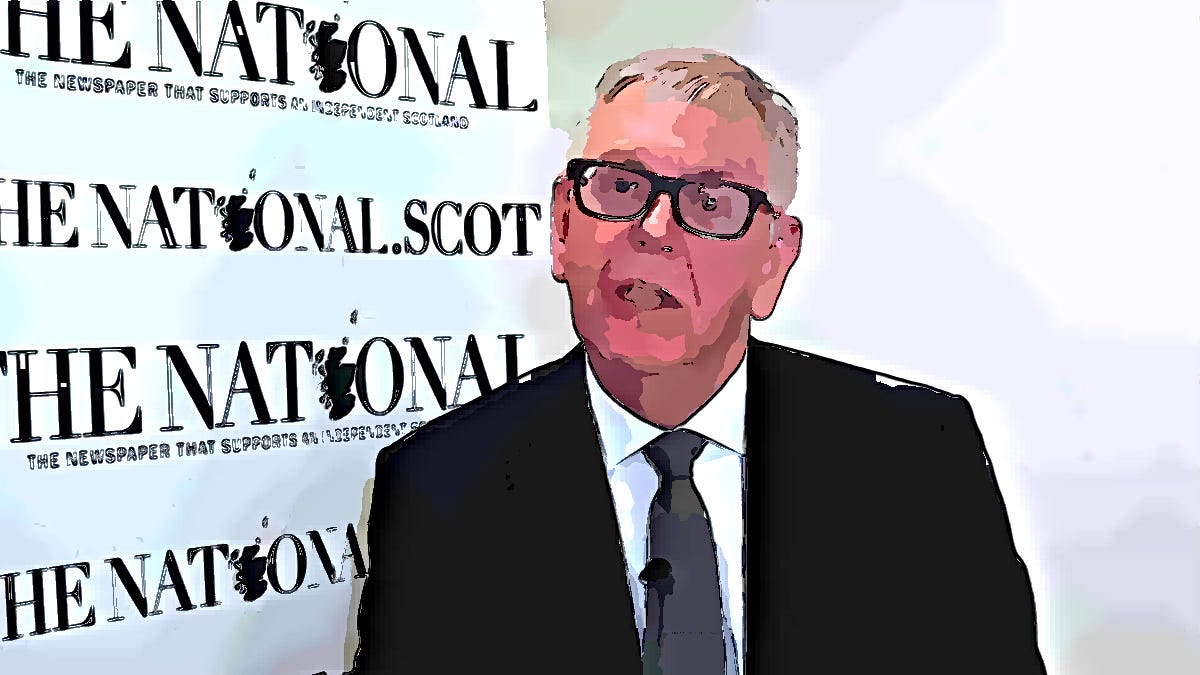
Richard Walker’s column in today’s National makes for very frustrating reading. That he is having serious doubts about the SNP and John Swinney is very clear. But in the end, he is still willing to give them one more chance. He sees that “the SNP have failed to move the dial on public opinion and to show a recognisable route to achieving its aim [of independence]”. He sees that John Swinney’s SNP-only ‘plan’ is “an attempt to rally voters to the SNP rather than a plan to achieve independence”. He sees the folly of a ‘plan’ which is crucially dependent on the British Prime Minister doing something he has stated emphatically he will not do. And yet, he still pins his hopes on the SNP.
There are things that he doesn’t seem to realise. He seems to think a Section 30 referendum would be satisfactory, supposing there was any chance that Starmer or his successor would allow it. He doesn’t see that the British state would be just as undemocratic with regard to a Yes win in a strictly consultative and non-self-executing referendum as it has been in refusing to recognise mandates for a new referendum.
Richard Walker sees that Swinney has set out no fallback plan—no plan B—for when his plea for a sham referendum is rejected. But he excuses this on the grounds that “it’s unwise to share your plans with your opponents”. He doesn’t see what a feeble excuse that is. He doesn’t see that there cannot be any course of action available to him that the British state could not be aware of. Nor does he recognise the fact that Swinney’s plan A precludes any plan B. Because any plan B would have to be something other than a Westminster-sanctioned referendum, and Swinney has been adamant that an ‘agreed’ referendum is the only way.
Richard Walker writes:
If Westminster continues to ignore democratic conventions, there must be consequences. Something has to happen as a result. It can’t just be more years of stasis as more and more energy drains from the independence movement and the dull mundanity of party politics reasserts its deathly dominance.
He fails to see the inconsistency here. If, as John Swinney claims, an SNP single-party majority will be a mandate the British state cannot ignore, then the time to spell out the consequences is before the election. That is when the consequences might have some effect. A double effect, in fact. Spelling out the consequences would add to pressure on the British state, and it would also encourage pro-independence voters.
John Swinney is not spelling out those consequences because there are none. His own strategy rules out the possibility of consequences for the British state. By asking for a Section 30 order, Swinney concedes the British state’s authority to refuse. He accedes to the English/British doctrine of parliamentary sovereignty and, in doing so, denies the principle that the people of Scotland are sovereign.
It is clear that Richard Walker is somewhat disenchanted with the SNP. But he continues to labour under the illusion that the SNP is working for Scotland’s cause. It really isn’t!
Yes, the problem for pseudo nationalists like Richard Walker and the numerous other commentators given space in 'The National' is that their understanding of our colonial condition remains so 'rudimentary'.
The bane and 'great weakness' of any independence movement is such bourgeois intellectuals, according to postcolonial theory, who remain in denial of the colonial condition of the people and nation:
https://yoursforscotlandcom.wordpress.com/2024/05/25/the-three-phases-of-decolonization-lessons-for-scotland/
Thankfully much of the independence movement itself has already moved on, evidenced by the widening gap between support for independence and support for a deceitfu national party that has long since been 'co-opted by colonialism'.
The evolution of Richard Walker's thinking on the constitutional question, like so many of those in the Independence movement, is the human equivalent of a slow train coming. Although at least he isn't completely stalled and up a junction like the SNP itself:
1. The driver is not locomotive qualified.
“If Swinney’s gamble pays off and he achieves his targeted majority …”
That is not Swinney’s objective. His aim is SNP (and his) re-election. If he achieves his STATED goal of an SNP-only majority (of MSPs) then than “gamble” will have backfired.
2. The rail track points have been switched
“ … and yet the ability to call such a referendum, if we are to accept the Supreme Court ruling, remains legally with Westminster …”
So why continue with the futile, humiliating and plain wrong exercise in granting a Westminster sanction? A new track should have been laid to take the train in the correct direction of the true destination rather than aiming at the buffers.
3. The carriages are only half full
“You might think that by now the Scottish people would have thought more deeply about why our neighbours south of the Border are so determined to deny energy-rich Scotland even the ability to express an opinion on independence …”
No wonder half the population isn't getting on board if they don’t even know if there is any railroad round the next bend.